




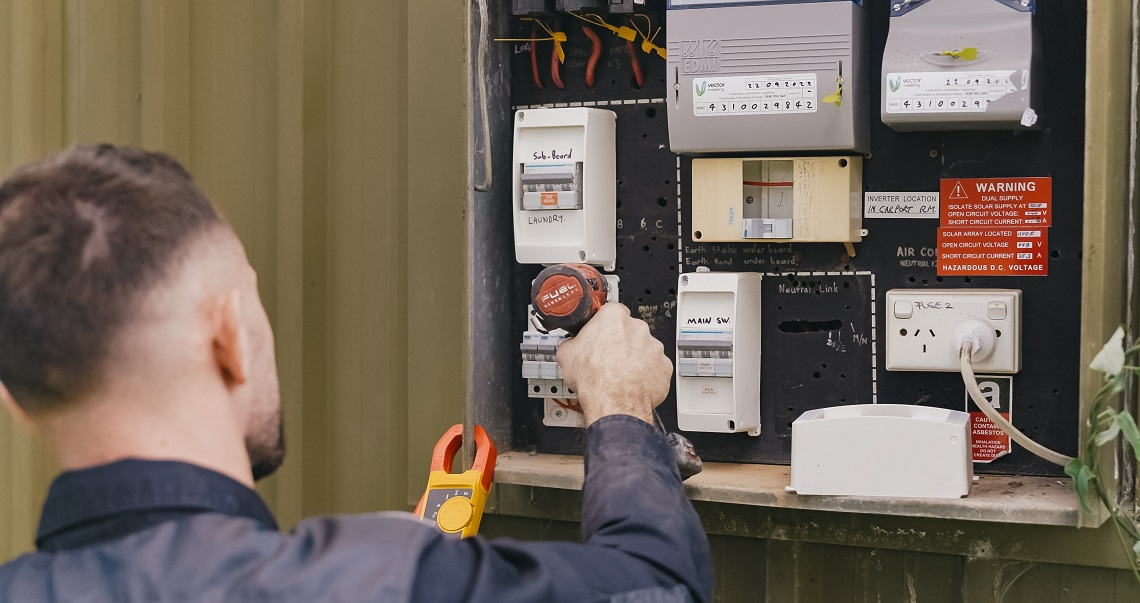
According to Fire and Rescue NSW, electrical faults and appliances can cause close to 40% of residential fires each year in NSW. The good thing is that these fires are preventable with an efficient, properly functioning electrical system.
Sydney homes, particularly older properties across the Inner West, Western Sydney, and other established suburbs, carry a rich electrical history. Systems built in the 1970s and 1980s simply weren’t designed for today’s energy demands.
Air conditioning, induction cooktops, EV chargers, home offices, smart home systems and loads have changed dramatically, but the wiring in many homes hasn’t kept up.
Here are the 10 most common electrical problems our team gets called out to fix.st?
At League Electrical, we want to equip our customers with all the necessary information to keep them and their families safe. Here are some common issues we see day-to-day in our work.
Let’s learn more about what each means and how to fix these.
Have you recently noticed lights in your home flickering? If it has happened once or twice, it’s no big deal. But if the flickering is persistent or is in a room where other appliances are also running, it’s time to get it checked.
Generally, the most common culprit is loose wiring connections that generate heat behind your walls. Over time, this heat builds up and becomes a serious fire risk. Voltage fluctuations from high-demand appliances cycling on and off can also cause the same effect as failing light fixtures or worn-out switches.
If you’re consistently seeing this problem in your Sydney home, call League Electrical. Our certified electricians inspect the affected circuit, test voltage levels, and identify any loose or corroded connections.
If they find any issues, such as if the wiring is past its use-by date or a faulty connection, we recommend rewiring rather than a temporary patch.
Today’s households run significantly more appliances than older homes were designed to support. This leads to overloaded circuits, which cause frequent tripping. When too many devices share a single circuit, the breaker cuts power to protect the wiring.
Other causes may include:
Our licensed electricians identify overloaded circuits, properly redistribute the electrical wiring, replace any faulty breakers, or, where the switchboard itself is the problem, replace it. We also recommend a full switchboard upgrade to bring your home up to current electricity standards.
If a power point in your home suddenly stops working, you simply brush it off. But in our experience, it’s often the first sign towards a bigger problem.
A dead power point could indicate internal wiring failure, tripped safety switches (RCDs), burnt components, or loose connections behind the wall plate.
Our expert electricians at League Electrical thoroughly test everything to verify circuit continuity and identify hidden faults.
A large number of Sydney homes are still running on switchboards with ceramic fuses rather than modern circuit breakers. Some have wiring that even predates the current Australian standards by decades.
Old switchboards lack residual current devices (RCDs), which are the safety switches designed to cut power within milliseconds if a fault occurs.
NSW Fair Trading requirements now mandate RCDs on all circuits in domestic settings with a rating of 32 amps or less. But homes built before that legislation came into effect in 2019 may not have them.
Here are a few signs your switchboard might need attention
We carry out a full switchboard upgrade, including RCD installation, circuit breaker replacement, and compliance certification.
Power boards have become a way of life in most Australian homes. They’re also one of the leading causes of electrical fires.
A few signs to be aware of are outlets that feel warm to the touch, a buzzing or crackling sound near a power point, or multiple power boards daisy-chained together, which are all signs you’ve got more load on a circuit.
If you’re facing this problem, we install additional power points where you actually need them and upgrade circuits to safely handle higher loads.
A power surge or electrical surge is a sudden voltage spike that can damage or destroy appliances. Sydney’s summer storm season makes this a real and recurring issue, particularly in suburbs with older infrastructure.
If you’re seeing electrical surges like appliances resetting without warning, lights flickering when a big appliance kicks in, or electronics dying earlier than they should. All these are signs of an electrical surge.
We generally recommend whole-house surge protection, improved earthing and wiring, and dedicated circuits for high-demand appliances.
If you’re noticing a burning plastic or rubber smell or sparks in your switchboards or electronics, you should immediately call your local electrician.
What’s actually happening is that your wire insulation is melting somewhere in your system. Once this starts, you’re potentially minutes away from an electrical fire. Be vigilant and don’t jump to investigate it yourself. Also, don’t wait until morning or try to sort it out on your own.
Call us immediately at 1800 734 903 and our licensed experts will locate the fault, identify whether the damage has spread to adjacent wiring and carry out the repairs in full compliance with electrical safety standards.
If you’ve experienced a small tingle when you touch a light or switch, it means current is escaping from where it shouldn’t. This indicates damaged wiring, a faulty appliance or an earthing problem.
At League Electrical, our electricians will test the outlet or switch, find the source of the problem, and fix it. We'll determine whether the earthing across your whole system needs attention.
Buzzing from light fittings is usually caused by incompatible dimmer switches, loose connections, or failing fluorescent ballasts. It may also signal that a circuit is loaded beyond its capacity.
It's easy to get used to background noise in your home. This particular one is worth getting checked rather than tuning out. We identify whether the issue is in the fitting, the switch, or the circuit, and fix it at the source.
Moisture near outlets, especially in your bathrooms, kitchens, and laundry area, creates the perfect environment for short circuits, electrical shocks, and fire. If you have any leaking pipes, condensation problems, or a roof leak, any of these can introduce moisture into your wall cavities and wiring.
At League Electrical, our certified electricians conduct a full inspection of any affected circuits, replace damaged outlets or fittings, and ensure your bathroom and kitchen circuits comply with current Australian waterproofing requirements.
Any of the following is worth a call:
Small electrical problems don't stay small. Catching them early almost always costs less and carries far less risk than waiting.
May His light shine through our service.

Contact Us:
Opening Hours:
(Emergency work 24 hours x 7 days a week)
Quick Links
Electrical Services
Other Services
Copyright © 2026 League Electrical | Terms of Use
Website & SEO by Digital Marketing Agency Digital Impact Gurus
